


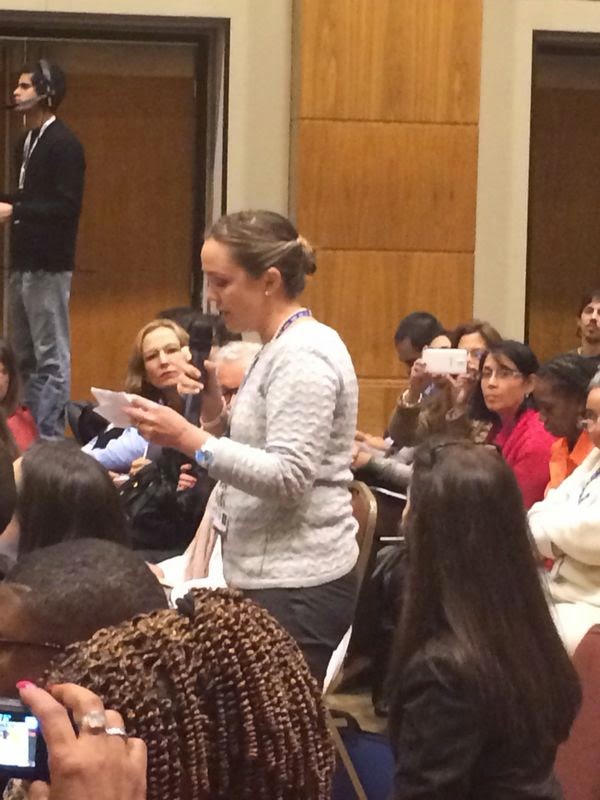
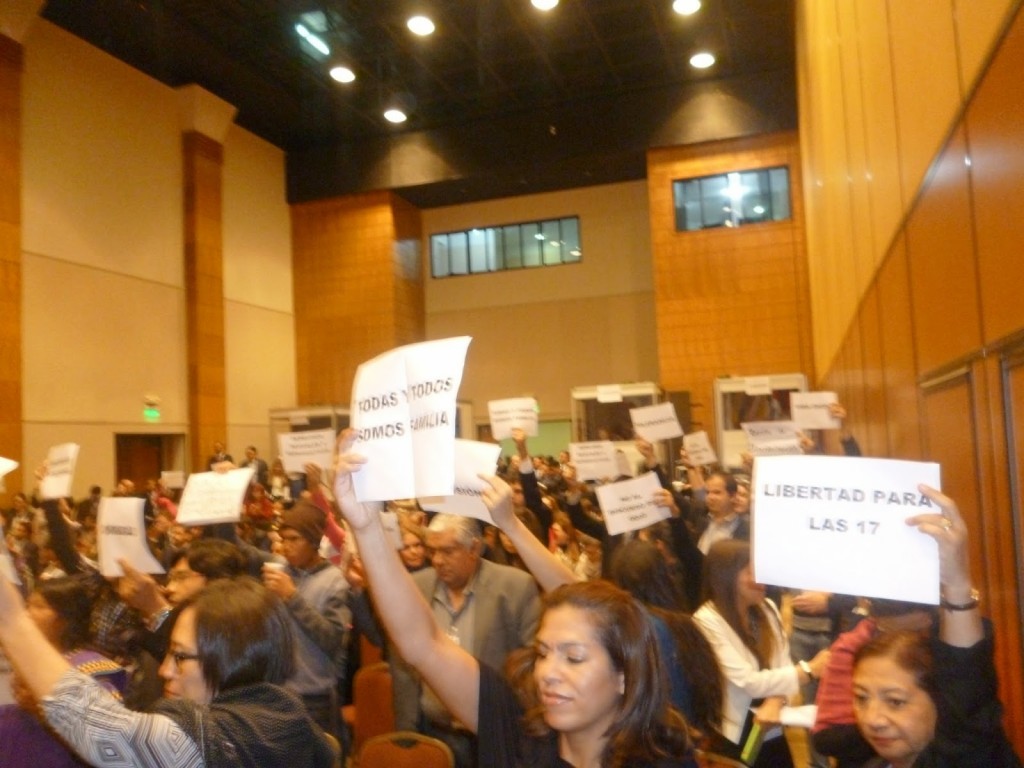
We saw as well the organized nature of the fundamentalists in the room and who spoke. We saw how they were prepared to lie in one instance saying there was consensus on one document between them and the Campaign, but instead pulled out their declaration and spoke to the General Assembly.
Here are some highlights of their presence.

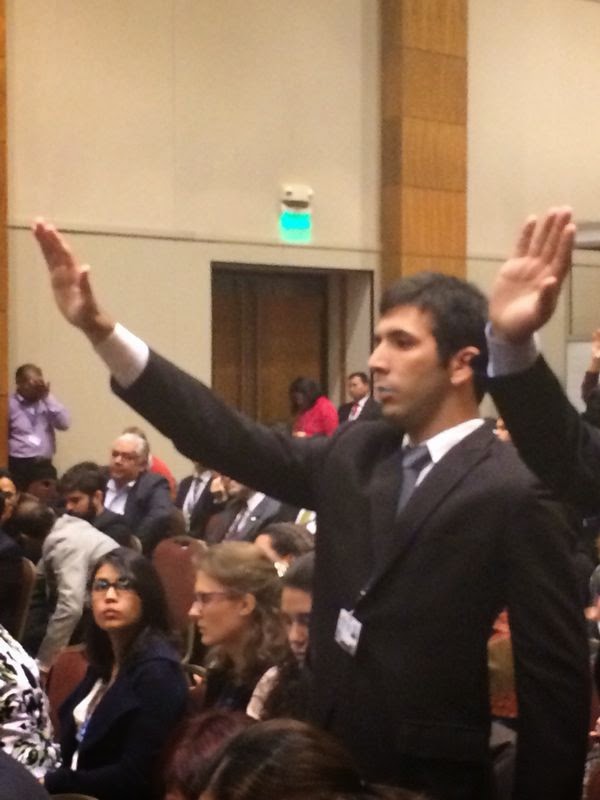
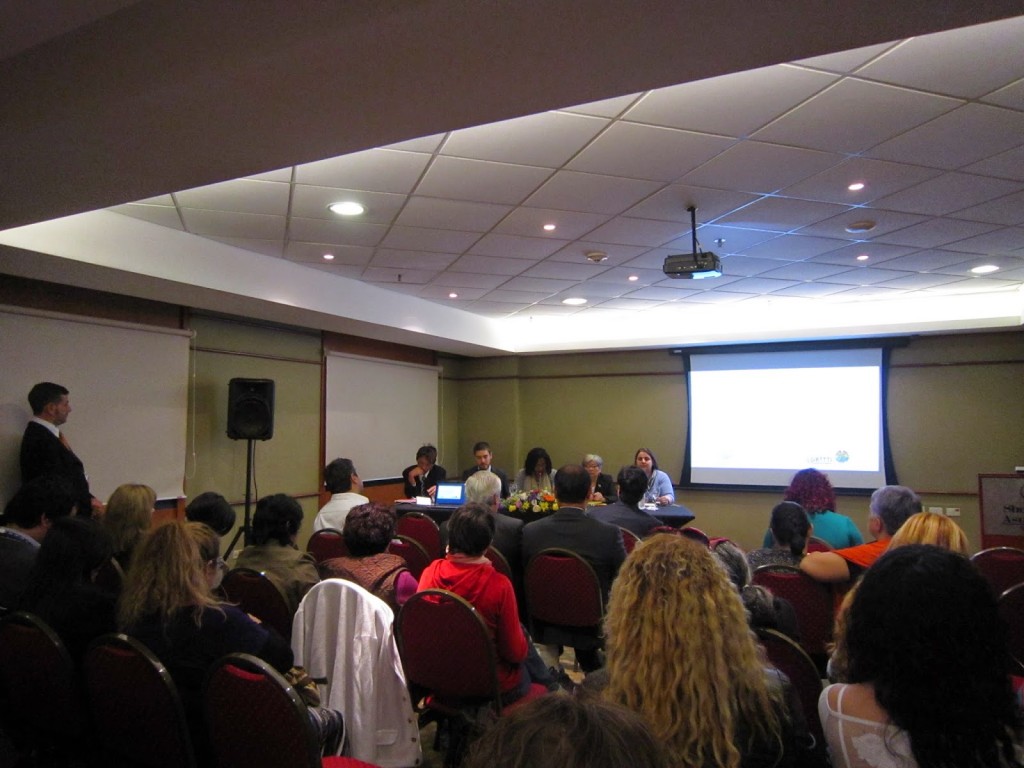
Later that day, we had a dialogue on Human Rights and discrimination at the Sheraton. Present was Tracy Robinson President of the Commission and Rosa-Maria Ortiz, Commissioner responsible for Belize, a Brazilian representative, President of the Aireana Carolina Robledo-a group for the rights of Lesbian and Caleb Orozco. of UniBAM.
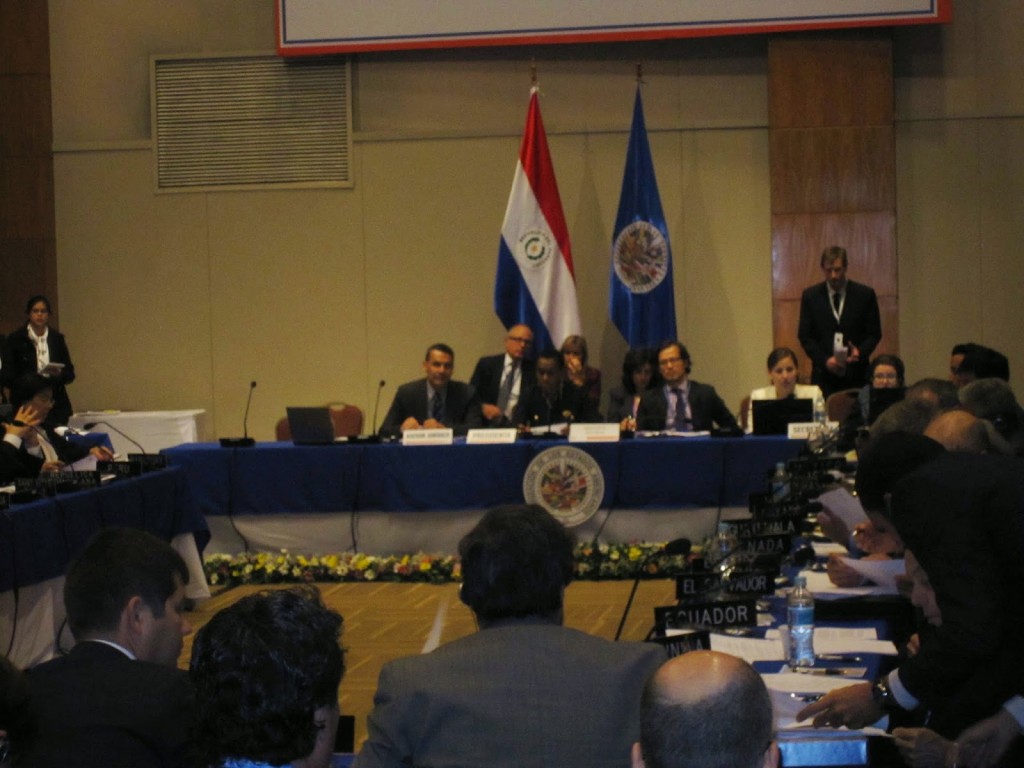
- The Government of Belize is unable to join consensus on this resolution given the fact that several of the issues and principles addressed therein, directly or indirectly, are at present the subject …
- The
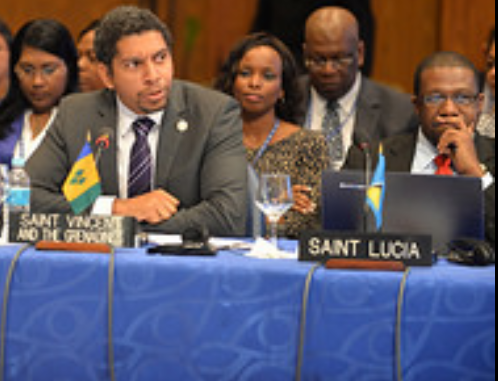
delegations of Saint Vincent and the Grenadines,
Saint Kitts and Nevis, and Dominica are
unable to join consensus on the approval of this resolution. Saint Vincent and the Grenadines
is of the view that the term “gender expression” …
- Government of Jamaica is unable to join the consensus on the approval of this
resolution, given that the terminology of gender expression, as proposed, is
ambiguous and has the potential…
- The
Government of Barbados is unable to join consensus on the approval of this
resolution given that a number of the issues and terms contained in the
resolution are neither reflected in its national … - The Republic of Suriname remains committed to promoting and defending all human rights for all and, based on the principle of equality, under which all who are within …
- The Government of Guyana is unable to join consensus on this resolution given the fact that several of the issues addressed herein are currently the subject of deliberation by a special select …
- The Government of Honduras wishes to state its commitment to human rights and to the international conventions that it has signed to that effect. Furthermore, it does not consider itself …
- Like Saint Vincent and the Grenadines, Saint Lucia is unable to join consensus on the approval of this resolution because the term “‘gender expression”‘ is one that is not thoroughly defined or has …
- the context of existing policy and legislation, the Republic of Trinidad and
Tobago is unable to support the resolution.
However, Trinidad and Tobago
is signatory to the Universal Declaration…
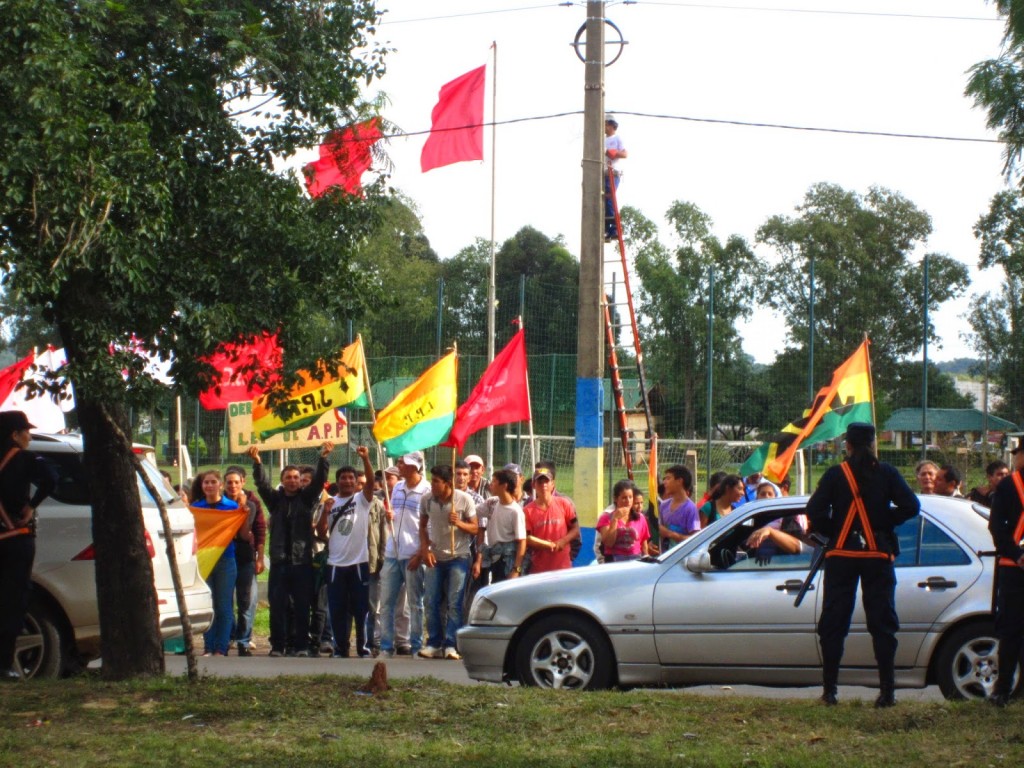
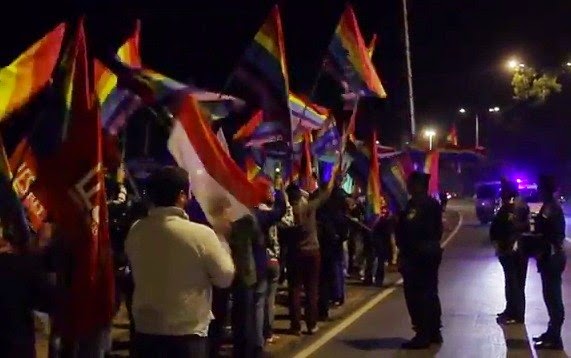
We also found protest outside the General Assembly with folks demonstrating for better land rights and the local gay organization SOMOSGAY. One show a protest just outside the CONMEBOL building where the General Assembly took place and one was downtown Paraguay. While the fundamentalists setup stage a well. The history of freedom in Paraguay, was marked by dictatorship and regime change which cost the lives of many. The work of state recognition in the region will be interesting to see, as each state define their responsibilities to their L.G.B.T citizens. For now, the lessons are, for some countries, they will negotiate away the rights of the minority for power and pandering, while others is open to be constructive and responsible.
Its clear to me that CARIFLAGS as a network has a lot of work to do in the region, as we have not begun to do proper political engagement, or profile the bigots who are called Ministers that exists in the region. Until we break the mold on political barriers, we will not get very far in any deeper response to their LGBTI citizens in the region. One person shared, the region does have a common policy, its a negative one that involved keeping buggery laws in 11 countries in the region, refusing to substantively invest resources in reducing stigma and discrimination and developing strong human rights institutions that supports not just LGBTTI citizens, but all. The region through PANCAP has paid lip service to the issue after 20 plus years of the epidemic. We have yet to see significant change in the region around homophobia and transphobia issues. The context of all this among CARICOM states is that it seems states are out of step with the times. CARICOM
Member States include: Antigua and Barbuda, The Bahamas, Barbados, Belize,
Dominica, Grenada, Guyana, Jamaica, Montserrat, St. Kitts and Nevis,
Saint Lucia, St. Vincent and The Grenadines, and Trinidad and Tobago. It
is not in effect in Suriname or Haiti.
Of note, There
are no legal barriers to homosexuality in 19 of the Caribbean
countries. (20 if you count Suriname.) There ARE legal barriers in 9
Caribbean countries (10 if you count Guyana) and all of those 9 are
CARICOM countries. There
are also anti-discrimination/hate crimes protection laws in 7 of the 30
countries in the Caribbean, which is 23%. (To put that into
perspective, 4 of the 7 Central American states have such laws; 30 of
the 50 US states (60%), in South America 9 of 14 (64%), in Europe 42 of
55 countries (76%) (in the EU 20 out of 28 (71%)), in Asia (excluding
the Middle east) 5 of 33 (15%), 1 of the 14 countries in the Middle East
(0.07%), in Oceania 12 of 27 (44%), and in Africa 5 of 51 (0.09%)
(excluding the 6 Indian Ocean states of which 4 have discrimination
protections).